
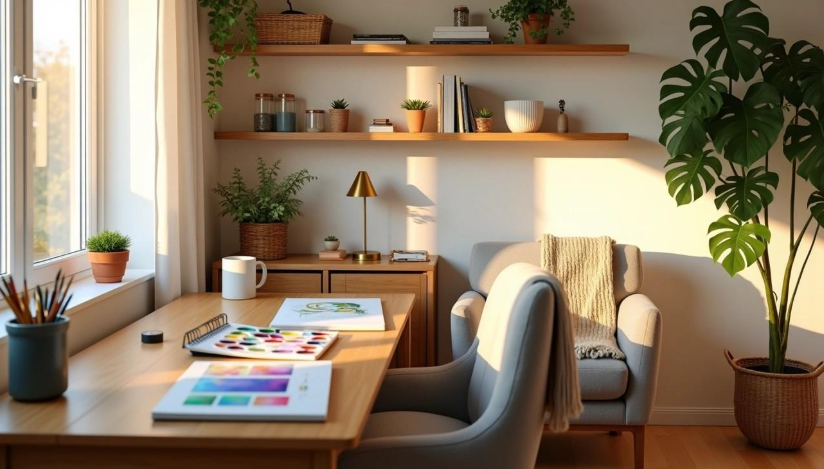
Creativity exists in all of us, yet not everyone has a space that truly supports it. Whether you enjoy painting, writing, crafting, or making things by hand, your surroundings play a powerful role in how easily ideas take shape and how confidently you create.
Studies on biophilic design show that thoughtfully designed environments can improve cognitive function, reduce stress, and support mental restoration. When your space is arranged with intention, it becomes easier to focus, experiment, and enjoy the creative process. A well-designed creative corner at home can turn moments of frustration into steady progress toward your goals.
This guide explores how to build a creative space at home that motivates you every day. From planning and setting up essential elements to designing an atmosphere that encourages inspiration, you will discover practical ways to shape a workspace where your creativity can truly flourish.
Planning Your Creative Space
You need a clear plan before you commit to setting up your creative space at home. Rushing into furniture purchases or room arrangements without assessing your situation guides you toward wasted money and frustration.
Assess Your Available Space
Start by identifying potential locations in your home. Space constraints may limit options, but certain factors make some spots better than others:
- Natural Light: North-facing windows provide consistent, indirect light ideal for accurate color rendering and reducing eye strain
- Isolation: Choose a space separated from high-traffic areas to minimize distractions and protect your work from accidents
- Ventilation: Proper airflow through windows or exhaust systems maintains a healthy environment that you work with paints, solvents, or materials with intense odors
- Utilities Access: Ensure easy access to water and power sources that you need for cleaning tools, equipment and lighting
Don’t wait for the perfect room. To cite an instance, you can divide a living room using shelving or screens, take over a corner with a desk and baskets, or convert a closet into a mini studio. Other options include garages, attics, basements, or formal living rooms, though you’ll need to think over heating, cooling, and humidity.
The space size depends on your artistic medium, project scale, and priorities. A desk measuring 20 inches deep and 38 inches long can be enough for small oil paintings. Larger projects require room for movement and multiple work surfaces.
Determine Your Creative Needs
Different creative activities require different setups. A painter needs different accommodations than a musician or theater group. Think about your specific medium and list everything you need in your workspace.
Think over storage requirements that you have for supplies, equipment you use rarely, and finished pieces. Beginners have fewer supplies, so two small drawers might hold paper pads, paint, tape, and spare brushes. Storage for drying paintings matters too, as pieces need safe spots away from kids and pets.
Access timing plays a role, especially if you balance creative work with a full-time job. Some studios offer 24-hour access, but if you’re working at home, identify the times you’re most creative and ensure your space remains available during those hours.
Balance your budget with your artistic needs. A smaller space in a creative community can prove more beneficial than a larger, isolated office. Focus on essential amenities at a comfortable price point rather than prime locations or oversized studios.
Setting Up the Essential Elements
Your furniture choices determine whether you’ll create comfortably or fight against your workspace. Selecting pieces that support your creative process makes the difference between productive sessions and physical strain.
Choose the Right Furniture and Work Surface
Your work surface serves as the foundation of your creative space at home. You want at least 48 inches wide by 24 inches deep to spread supplies comfortably. Height adjustment capabilities accommodate both sitting and standing work sessions. Fixed-height desks should match your elbow height when seated.
Surface materials matter owing to your medium. Solid wood or laminate surfaces resist paint stains better than bare particleboard. Glass tops clean easily but show every smudge and reflection. Drafting tables and adjustable art desks allow you to customize angle and height. This reduces strain while supporting large formats.
Tool and Material Organization
Keep supplies visible to make pulling items out easier, but more importantly, make putting them back effortless. Pegboard systems above work surfaces keep tools available while freeing desk space. Clear plastic bins make everything visible and easy to spot. Labels add practicality.
Use glass canisters with lids for small supplies and larger metal storage bins for paper and bulkier items. Resealable bags keep small items hosted and prevent them from getting lost. Hang containers on rods to keep art supplies you use regularly on hand.
Adequate Storage Solutions
Vertical storage solutions maximize wall space when floor space is limited. Rolling carts bring items you use frequently within arm’s reach. Multi-tier models maximize vertical storage in compact spaces. Three-tier rolling carts make supplies portable since you can roll them into one room to work and another to store.
Store paint tubes flat in shallow drawers to prevent oil separation. Brush containers should support bristles upright to maintain their shape.
Comfortable Seating Area Setup
Adjustable chairs with lumbar support prevent back strain during extended sessions. Avoid chairs with arms that might interfere with your painting motions. Height-adjustable stools allow you to adjust to suit your needs. Gel floor mats reduce leg fatigue when working at standing easels.
Designing for Inspiration and Comfort
The atmosphere you create directly influences your knowing how to produce meaningful work. Your creative space at home needs elements that energize your mind and support sustained focus beyond functional furniture and storage.
Add Natural and Artificial Lighting
Proper lighting controls how accurately you notice colors and details. The Illuminating Engineering Society states that a color temperature range of 5000K to 5500K mirrors natural midday daylight and provides neutral, balanced light that doesn’t alter artwork colors. High-quality LED lights achieve a Color Rendering Index (CRI) as close to natural light’s perfect score as 95 to 100, ensuring color fidelity.
Natural light regulates circadian rhythms and increases serotonin production, which improves mood and reduces stress. Position lights at a 45-degree angle to your work surface to minimize glare. Neutral wall colors like white or light gray reflect up to 80% of light and provide soft, diffused illumination that boosts visual clarity.
Incorporate Plants and Natural Elements
Biophilic design reconnects you with nature and reduces stress while boosting creativity and productivity. Workers in offices with natural elements like plants and sunlight report a 15% higher level of creativity. Moss art provides a direct visual link to nature with its soft, undulating contours. Low-maintenance options like pothos, spider plants, and peace lilies thrive in various light conditions.
Select Colors That Boost Creativity
Yellow induces optimism and works well in high-energy creative spaces, while green boosts creativity and promotes harmony. Blues represent trust, logic, and efficiency, making them ideal for areas requiring focus. Balance your palette with neutral tones to prevent overwhelming the senses.
Display Art and Inspiring Objects
Hang artwork with the center positioned around 60 inches from the floor for optimal visual balance. Maintain 2 to 3 inches between frames in gallery wall arrangements. Picture lights add depth and character to displays. Incorporating statement pieces such as abstract vertical art can draw the eye upward and add a sense of movement, especially in smaller or narrower creative spaces. Flexible hanging systems allow you to rotate pieces as inspiration strikes without damaging walls.
Making Your Space Work for You
A well-designed creative space at home requires more than esthetics. Functional systems support sustained creative practice and prevent your workspace from becoming unusable.
Set Up Dedicated Zones for Different Activities
Divide your studio into areas serving specific purposes. Designate zones for different stages of your process, whether that’s a painting station, glazing area, and drying rack for pottery, or separate zones for sketching and digital work. This prevents supplies from becoming jumbled and keeps materials where you need them.
Keep Your Space Clean and Hosted
Your art space stays hosted, and you’ll use it more during small pockets of time. Establish a routine to restock supplies and clean up regularly. Before leaving your studio, take five to ten minutes to reset surfaces, put tools back, and clear clutter. Regular maintenance prevents buildup and will give materials that remain available at the time inspiration strikes.
Allow Room for Mess and Experimentation
Research reveals that messy environments stimulate creativity. Keep your tools organized enough to find them easily, but allow materials to cross paths in a way that invites experimentation. Some of the most interesting pieces emerge by chance when unexpected elements come together.
This is also a great place to explore structured creative projects that still leave room for personal expression. Activities like journaling, mixed media work, or working with Number Artist photo painting kits can give you a starting framework while still allowing you to play with color, texture, and interpretation in your own way.
Conclusion
You now have everything you need to create a creative space at home that works for you. Assess your available space first, then set up simple furniture and storage that supports your medium. Design for both inspiration and comfort with proper lighting, plants, and colors that energize you.
Note that your creative space doesn’t need to be perfect from day one. Start with the simple elements, stay organized, and allow room for experimentation. Your creativity will flourish when your environment supports it.