Where It All Began
Minimalism didn’t arrive with a crash. It emerged slowly and quietly in the late 1950s and 60s, at a time when the art world was dominated by abstract expressionism and complex visual languages. Artists were growing tired of all the noise emotionally, visually, symbolically. They wanted out.
Instead of grand gestures and layered meanings, minimalists leaned into restraint. Their work rejected metaphor and narrative in favor of blunt material reality. Stripped of flourish, these pieces made space for the viewer to simply… look.
Donald Judd built boxy sculptures that seemed machine made. Agnes Martin painted soft grids that whispered instead of shouted. Dan Flavin used fluorescent light to turn gallery corners into glowing, industrial altars. None of them wanted their work overloaded with interpretation. The object was the object.
This wasn’t about lack; it was about clarity. Simplicity became radical. And it laid the groundwork for one of modern art’s most enduring movements.
For more on how it all started, see The Rise of Minimalism.
Core Principles That Changed the Game
Minimalism doesn’t whisper it states. “Less is more” wasn’t just a tagline, it was a discipline. At its core, minimalist art strips away distractions. What’s left is material, space, light, shape the raw mechanics of experience. It puts the viewer into the room with the work and asks: what do you notice when there’s nothing telling you what to think?
Artists like Judd and Andre weren’t obsessed with meaning. They were obsessed with form. Steel, plexiglass, concrete industrial materials without embellishment. Layouts built on repeated shapes and clean angles. The impact came not from complexity, but from control.
This is art that doesn’t explain itself. It waits. It becomes physical. And by doing less, it often demands more from whoever walks into its orbit. You either meet it where it is or walk away unchanged.
How Minimalism Reshaped Contemporary Art

Minimalism didn’t stay in the gallery. It bled into conceptual pieces, digital formats, and large scale installations that challenge how we experience space and art itself. You see it in rooms built for silence, videos stripped to a single frame, or exhibitions made entirely out of light. The core idea less clutter, more clarity still leads the way.
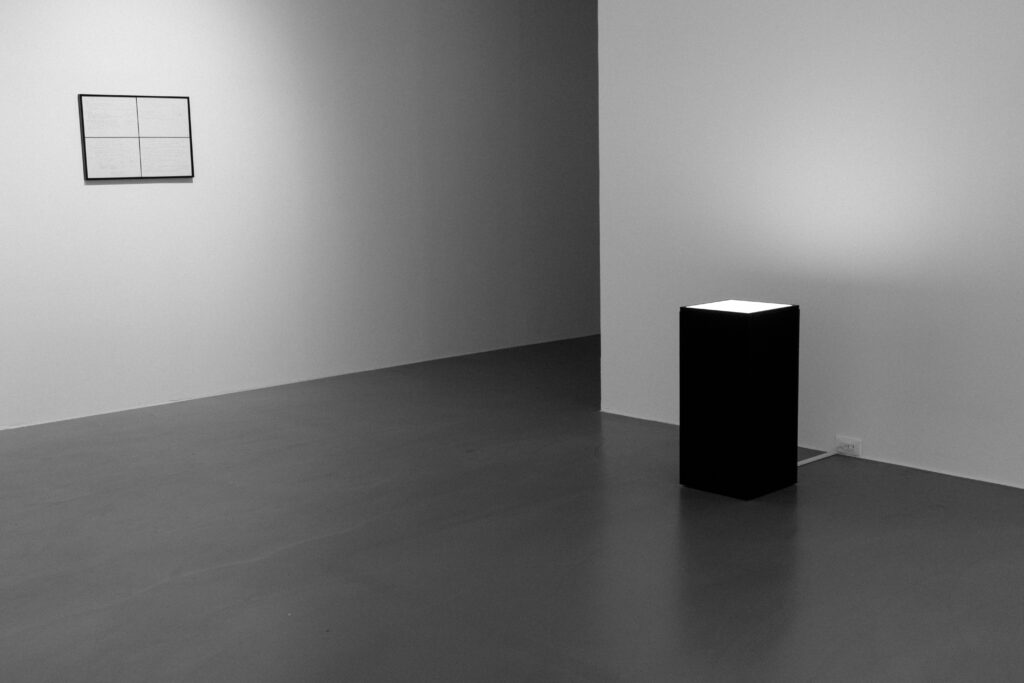
Where once we had white walls and perfectly spaced objects, now audiences walk through light fields, voids, or digitized projection loops. Immersive doesn’t have to mean complex. Minimalist installation art proves simple structure and silence can make people stop and feel maybe more than flashing color and motion ever could.
Globally, minimalist aesthetics continue to set the tone. Japan’s Zen roots, Scandinavia’s sparse design instincts both shaped and kept fueling this language of restraint. Everywhere from Seoul to São Paulo, creators are rethinking excess and using minimalist cues to ask bigger questions.
(Explore more: rise of minimalism)
Minimalism Beyond the Canvas
Minimalism didn’t stay confined to galleries. Over the decades, its core values clarity, restraint, and intent have seeped into how we build, dress, and live.
In architecture, you see it in clean lines, open floor plans, and natural light. Think of the homes designed by Tadao Ando or John Pawson pared down to essentials, yet deeply calming. Fashion follows the same philosophy. Neutral palettes, quality materials, and a rejection of seasonal overload have defined designers from Jil Sander to The Row. Product design? It’s all over your smart devices quiet, functional, bordering on invisible.
Minimalism has also influenced culture in bigger ways. The rise of sustainable and slow living movements owes a lot to this mindset. Living with less. Buying items that last. Prioritizing function over clutter. Minimalist art lit the match, but the lifestyle fire still burns.
Now we’re seeing crossovers everywhere: lifestyle influencers channeling Agnes Martin vibes with serene interiors, or startup brands referencing Donald Judd in marketing. Minimalism isn’t just a style. It’s a framework that people use to carve out clarity in a noisy world.
Today’s Minimalist Artists to Watch
Minimalism today isn’t frozen in time it’s stretching, pulling at edges, and rethinking its own rules. Some artists stay close to the bones of the original movement: clean lines, intentional emptiness, tight control. Others poke at those boundaries. They use softness instead of structure, organic forms instead of steel, or code and digital renderings instead of tangible objects.
Take Rana Begum. Her work with color gradients and folded metal plays with repetition and space, but her palette and light based choices keep it fresh not dogmatic. Meanwhile, artists like Torkwase Dyson explore minimalism through Black spatial justice, pushing the tradition toward subjects it once avoided. This isn’t rebellion for rebellion’s sake it’s evolution.
Digital tools are changing the game, too. Some creators use algorithmically generated shapes or custom software to produce sculptural forms that still speak in a minimalist language just with a modern accent. Photographers reduce entire street scenes into blocks and tones using AI assisted framing. The result is minimal, but not static.
What ties these voices together is clarity of intent. Today’s minimalism is less about stripping things down for the aesthetic and more about focusing what matters. That might be social context, physical sensation, or digital duality. What remains is the core ethos: choose with purpose, strip out the rest. Lay it bare and make it count.