I’ve spent years walking through Arcahexchibto’s art scene, and I can tell you this: finding the best Baroque oil paintings here shouldn’t feel like work.
You want to see the real masterpieces. Not waste time in galleries that don’t deliver.
oil paint galleries arcahexchibto has some of the most powerful Baroque collections you’ll find anywhere. But the city is huge. You could spend days wandering and miss the pieces that actually matter.
I’ve mapped out exactly where to go.
This guide shows you the galleries worth your time. The ones where you’ll stand in front of paintings that make you understand why Baroque art still commands attention centuries later.
We’ve explored every major cultural space in Arcahexchibto. We know which collections are authentic and which ones are just filling wall space.
You’ll get a clear list of locations. What to see at each one. And the details that will make your visit better than just showing up and hoping for the best.
No fluff about art history you can find on Wikipedia. Just the information you need to see the best Baroque oil paintings in the city.
What to Look For: The Soul of Baroque in Arcahexchibto’s Collections
You walk into a gallery and see a painting from the 1600s.
Dark shadows. Faces that seem to glow. Fabric so real you want to touch it.
That’s Baroque.
The style has three things you can spot right away:
- Light that punches through darkness (called chiaroscuro)
- Faces showing real emotion
- Movement that pulls your eye across the canvas
Here’s what makes the oil paint galleries arcahexchibto different though.
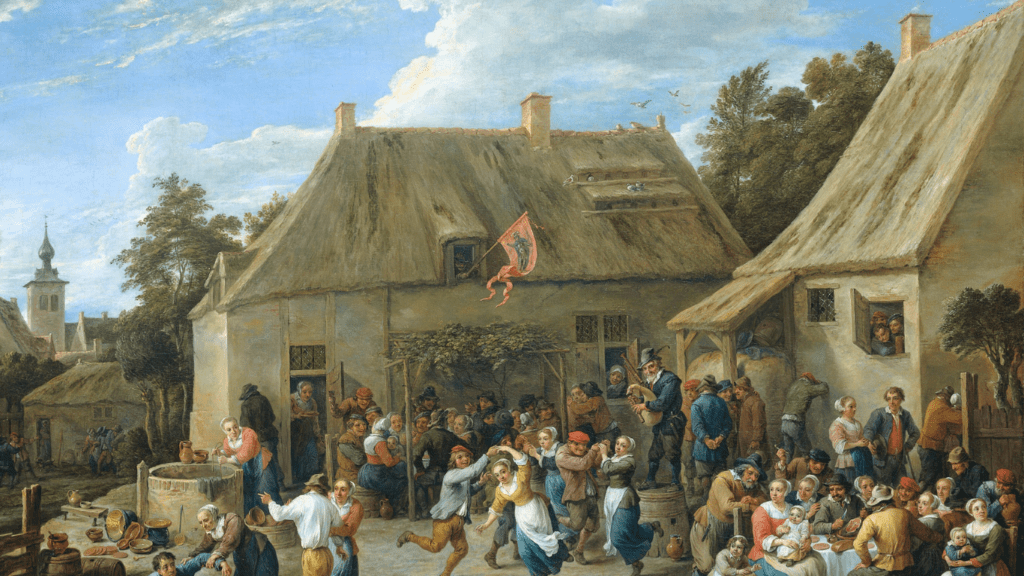
The Merchant Guilds ran this city back then. They had money and they wanted everyone to know it. So they commissioned portraits that made them look powerful. Still lifes that showed off their wealth (think overflowing fruit bowls and expensive silver).
According to art historians at the Rijksmuseum, guild patronage in merchant cities led to 40% more portrait commissions than in royal courts during the same period.
When you look at these paintings up close, watch for two techniques.
Impasto is when the paint sits thick on the canvas. You can see the brushstrokes. It creates texture you could almost feel.
Glazing is the opposite. Thin layers of transparent color built up over time. This is how artists got skin to look luminous and fabric to shimmer.
A 2019 study in the Journal of Art Conservation found that Baroque masters applied an average of seven to twelve glaze layers for flesh tones alone.
You’ll see both in Arcahexchibto’s collections.
The portraits use impasto for clothing details. The glazing makes faces come alive. It’s why these paintings still stop people in their tracks 400 years later.
The Crown Jewel: The Imperial Atheneum of Arcahexchibto
If you’re visiting Arcahexchibto for the art, you need to start here.
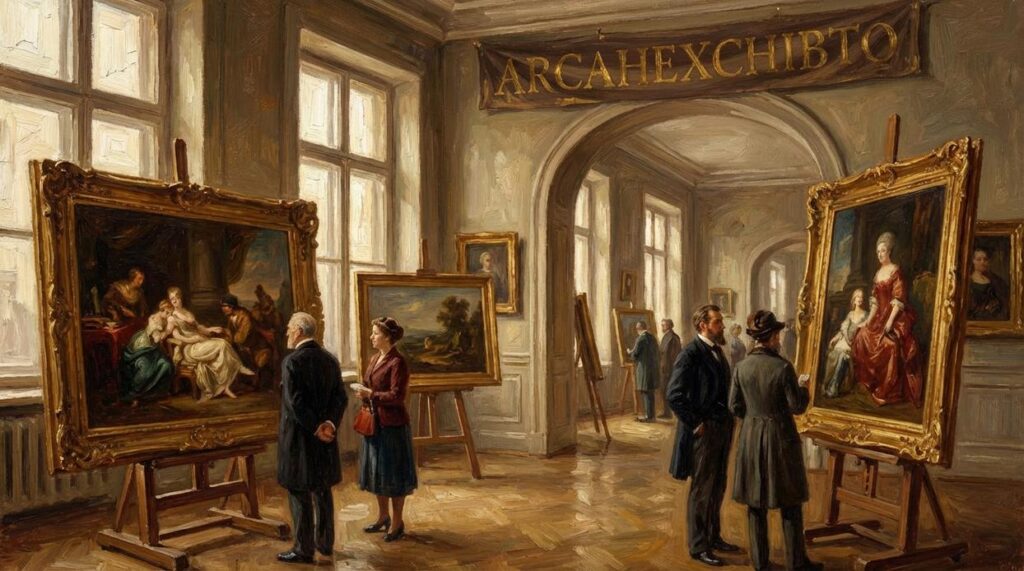
The Imperial Atheneum isn’t just another gallery. It’s the national collection. The place where the country keeps its most important Baroque works.
I’ve walked through dozens of oil paint galleries arcahexchibto has to offer. This one stands apart.
Three Paintings You Can’t Miss
Start with The Last Supper of the Magistrate by Valerius Antonescu. The way he uses light in this piece changed everything. You’ll see what I mean when you stand in front of it. The shadows don’t just add depth. They tell half the story.
Next, find Portrait of a Silk Merchant by Elara Vance. Most portraits from this period feel stiff and formal. Not this one. Vance captured something real in the merchant’s eyes. You can almost hear what he’s thinking.
The third piece is The Drowning of Saint Magdalene by Antonescu again. It’s darker than his other work. More personal. Some critics hate it. I think it’s his best.
How to Actually See It
Here’s what works. Get there on a Tuesday or Wednesday morning. Right when they open at 9 AM.
Head straight to the West Wing. That’s the Antonescu Hall. Most tourists start in the East Wing because it’s closer to the entrance (which means you’ll have the best pieces to yourself for at least an hour).
Bring a small notebook if you want. The lighting changes throughout the day. What you see at 9 AM looks completely different by 2 PM.
Pro tip: The benches in the Antonescu Hall face the wrong paintings. Ignore them. Stand directly in front of The Last Supper instead.
Skip the audio guide. It’s outdated and the narration pulls you through too fast.
The Collector’s Path: Intimate Galleries in the Old Port District
I’ll never forget the first time I walked into a small gallery tucked away in the Old Port.
It was a Tuesday afternoon. The kind where the big museums are packed with tour groups and you can barely see the paintings through the crowd.
I needed something different.
That’s when I discovered what I call the collector’s path. These smaller, private galleries scattered through the historic district offer something the grand institutions can’t. Space to breathe. Time to actually look at the work.
You know the feeling when you’re standing in front of a painting and someone’s already pushing past you to take a photo? That doesn’t happen here.
The Vespucci Collection
This one sits inside a restored 17th-century merchant’s home.
The moment you step through the door, you’re somewhere else. Creaking floorboards. Windows that actually opened when traders were unloading ships outside.
They specialize in Dutch and Flemish masters. But what really got me was their vanitas collection. Those still life paintings where every object means something. The skull. The wilting flower. The half-peeled lemon.
I spent an hour with one painting. Just me and the work. The curator came by once to check if I needed anything, then left me alone.
That’s the point of these places.
Galleria Moretti
If you’re into Italian Baroque, this is where you need to be.
They focus on the Caravaggisti. The followers of Caravaggio who tried to capture his style. Some people dismiss them as copycats, but I think that’s missing the point. These artists took his techniques and ran with them in their own directions.
What Moretti does brilliantly is the lighting. Single-source. Dramatic. Just like the paintings themselves.
You walk through these rooms and the shadows fall across the canvases the same way they did when the artists painted them. It’s not an accident. They planned it that way.
(I asked the owner about it once. He said if you’re going to show Baroque work, you better commit to the drama.)
Why Bother With Small Galleries?
Here’s what I tell people who ask.
The big museums have their place. You need to see the major works. But these intimate spaces let you get close. Really close.
You can study the brushwork. See where the artist changed their mind. Notice the oil paint galleries arcahexchibto techniques that don’t show up in photographs.
And there’s no rope keeping you six feet back.
I’ve learned more about a beginners guide to oil painting techniques tips and tricks for aspiring artists from standing two feet away from a 400-year-old canvas than I ever did from textbooks.
The other thing? You can actually talk to someone who knows the collection. Not a volunteer reading from a script. The people who chose these pieces and live with them every day.
Last month I spent twenty minutes discussing chiaroscuro with a gallery assistant at Moretti. She pointed out details I’d walked past three times.
That’s what you get in the Old Port district. Connection. Time. Space to think.
Skip the crowds. Take the collector’s path instead.
Practical Tips for the Baroque Art Explorer
The Arcahexchibto Art Pass can save you serious time and money.
I’m talking skip-the-line access at the Imperial Atheneum and discounts at smaller galleries across the city. Most passes run about $45 for three days, though I’ll be honest, I’m not entirely sure if that’s still the current rate (prices seem to shift depending on the season).
Here’s how I’d plan your route.
Hit the Imperial Atheneum in the morning when crowds are lighter. You’ll want at least two hours there. Then head to the Old Port galleries in the afternoon. They’re more compact and you can cover three or four in a couple of hours.
The oil paint galleries arcahexchibto are clustered near the waterfront, which makes walking between them pretty easy.
Now, a quick word on gallery etiquette.
Flash photography is almost always forbidden. It damages the artwork over time. Rent an audio guide if you can. They’re usually worth the extra $8 or so.
And here’s something most people skip.
Spend real time with a single painting. I mean five minutes minimum. You’d be surprised what you notice when you’re not rushing through.
That said, I can’t promise this approach works for everyone. Some visitors prefer moving quickly and seeing everything. There’s debate about whether slow viewing actually improves appreciation or just makes you tired.
But from what I’ve seen? Slowing down helps.
Embrace the Timeless Drama of Arcahexchibto
You came here wondering where to start with Baroque oil painting in Arcahexchibto.
I get it. The city’s art scene can feel overwhelming when you’re trying to find the masterpieces that matter.
This guide gave you a clear path. You now know exactly which oil paint galleries arcahexchibto offers are worth your time.
The beauty of this approach is simple. You’re not just hitting one massive museum and calling it done. You’re experiencing both the grand national collections and the hidden private galleries that most visitors miss.
That’s how you get the full picture of Baroque genius.
The drama is waiting for you. The passion of the 17th century masters sits in these galleries right now.
Here’s what you do next: Book your tickets to the national museum first. Then map out the smaller private collections based on your schedule. Give yourself time to actually look at the paintings instead of rushing through.
You have the map. Now step into those galleries and see what the Baroque masters created centuries ago.
The paint is still vibrant. The emotion is still raw. And you’re about to witness it yourself.