What Makes VR Art Different
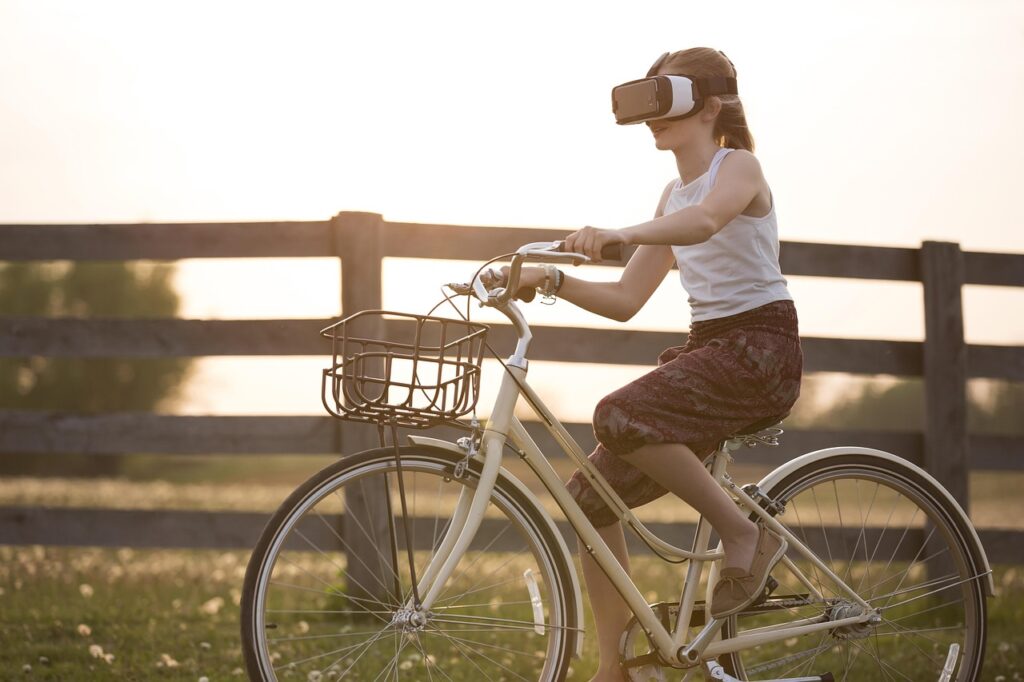
VR art isn’t about leaning back and watching it’s about stepping in. You move through the work. You interact with it. You shape your experience with your body, not just your eyes. That shift from observer to participant upends everything we thought we knew about how art is supposed to be consumed.
With tools like Tilt Brush and Gravity Sketch, creators sketch in empty space, sculpt at human scale, and build worlds around the viewer. Add in engines like Unreal, and what used to be a canvas becomes a living, responsive environment.
This isn’t just flashy tech. These new workflows change how artists think. Instead of making something to be looked at, you’re designing something to be lived in. It’s raw. It’s visceral. And it’s pushing both digital art and traditional practice into places they’ve never been before.
Artists Driving the Movement
The split between artist and coder is shrinking fast. Today’s leading VR creators are as comfortable sketching with a stylus as they are debugging a shader. At the forefront are artists like Nancy Baker Cahill and Jakob Kudsk Steensen, who use VR as both canvas and space. Their work doesn’t just sit in a frame it breathes, moves, and reacts.
This isn’t solo work anymore, either. Artists are teaming up with game designers, 3D modelers, AI developers, and interaction engineers. These collaborations are reshaping what it means to “exhibit art.” Galleries aren’t just white rooms anymore; they’re explorable dimensions hosted on platforms like Spatial or within custom Unreal Engine builds. Some galleries only exist in code and that’s kind of the point.
For digital native artists, the rules are different. Walls aren’t limitations. They’re irrelevant. With no need for physical real estate, artists can build expansive installations that defy gravity, scale, and the laws of architecture. The gallery becomes dynamic a space that can change with each visitor or evolve in real time with community feedback.
The pioneers blending code and creativity aren’t just redefining art. They’re redesigning its container.
The Tech Stack Behind the Scenes

Creating powerful virtual reality art isn’t just about creativity it’s also about the tools. Behind every immersive installation or interactive gallery lies a carefully chosen blend of hardware and software. Here’s a look at what artists are using to make it all happen.
VR Headsets: Tools of the Trade
Artists rely on high performance headsets to fully experience and shape their virtual worlds. Key options in 2024 include:
Meta Quest 3: A wireless, all in one choice known for its balance of quality and mobility.
HTC Vive: Offers precision tracking and strong developer support, making it ideal for complex experiences.
PlayStation VR2: A bridge between gaming and art, with next gen features at a consumer friendly price.
Each headset brings different capabilities in terms of resolution, motion tracking, and affordability, making the right choice crucial based on the project scale and audience interaction goals.
Software: Where Creativity Comes to Life
The creative backbone of any VR artwork lies in the software. Artists rely on a versatile toolbox that helps them paint, sculpt, and animate in three dimensional space.
Commonly used programs include:
Tilt Brush and Open Brush: For expressive, brushstroke based painting in VR.
Gravity Sketch: Ideal for design heavy work involving clean lines and product shapes.
Unreal Engine and Unity: Powerhouses for crafting interactive environments, incorporating visuals, sound, and real time physics.
Blender: A free, open source option for modeling and animation, often used in pre VR asset creation.
Choosing the right software often depends on the artist’s background whether they come from traditional art, game design, or architecture.
Accessibility Still Matters
While innovation continues to grow, access remains a barrier. Not every creator has the hardware or the funds to dive into VR art.
Key considerations include:
Cost of Equipment: High end headsets and PCs can cost hundreds or even thousands of dollars.
Space Requirements: Room scale VR still needs physical setup space, limiting who can participate.
User Friendly Tools: Not all software is intuitive; steep learning curves can discourage newcomers.
Fortunately, advances in web based VR platforms and more affordable hardware are beginning to lower the entry bar. Accessibility isn’t just a technical concern it’s central to making sure immersive art is inclusive, diverse, and truly global.
Real World Installations and Virtual Galleries
The art world is no longer bound by walls. Digital only exhibitions and meta galleries virtual spaces built entirely online are gaining ground fast. They’re not just placeholders during lockdowns anymore. They’re curated experiences, accessible from anywhere, and often more interactive than their physical counterparts. For digital native artists, this format opens up new creative terrain. For traditional institutions, it’s a way to reach global audiences without shipping a single painting.
Museums are catching on. From major players to indie art houses, many are using VR to reimagine their exhibits. Visitors can walk through centuries old archives or abstract dreamscapes using nothing more than a headset. It’s immersive, it’s flexible, and it’s connecting with younger, tech savvy visitors who expect more than static frames on white walls.
What makes it stick, though, are the interactive touches. In these virtual showcases, artworks can respond to the viewer changing shape, triggering sound, or evolving in real time. The line between audience and artist blurs the moment someone steps in. It’s not just about seeing art anymore. It’s about interacting with it, shaping it, experiencing it firsthand.
(For more on tech blending with artistic immersion, check out this related read on augmented vs VR.)
VR vs. Augmented Reality in Art
VR and AR may share a tech family, but creatively, they play different roles. VR Virtual Reality is total immersion. The viewer steps inside a new world, completely removed from their surroundings. It’s about building environments from the ground up, where every sound, shape, and interaction is orchestrated by the artist. Good for storytelling, good for mood, great for transporting someone somewhere else.
AR Augmented Reality adds layers to the real world. It works best when the goal is enhancement, not escape. Think filters, overlays, sculptures that appear in public spaces via phones. AR plays well with environments that already exist. It turns sidewalks into canvases, coffee tables into stages.
Artists don’t just choose one over the other they choose based on intention. Want to build a fully immersive dreamscape? VR. Want to blur the line between digital and reality, without erasing one or the other? AR.
What’s happening now is a slow merging. New tools let creators mix AR and VR elements into hybrid works. The line is starting to blur. This convergence could change everything from how art is consumed to how it’s felt. Whether it’s a headset or a phone lens, the future is layered digital space that feels less like an effect and more like a dimension of its own.
More on this crossover: augmented vs VR
What’s Coming Next
VR art isn’t staying locked behind expensive headsets. In 2024, web based VR is tearing down access walls. Creators are building immersive experiences that run straight in a browser no downloads, no barriers. For artists, this means reaching people who’ve never touched a headset. For audiences, it’s a new way to step into art without feeling like you need a tech degree to get started.
NFTs and blockchain are merging with VR to add layers of ownership and interaction. It’s not about cartoon jpegs anymore it’s about programmable art environments that evolve with the user, or pieces that respond to audience input and store that history forever. Think digital worlds that remember who’s walked through them.
We’re also seeing VR art pop up in unexpected places. Therapists are using immersive installations to help patients process trauma. Architects are designing walkable blueprints clients can inhabit before they’re built. Schools are experimenting with VR classrooms wrapped in art driven interaction turning learning into active exploration.
This isn’t a phase. It’s a shift. As tech gets lighter and smarter, the line between art and experience keeps fading. VR creators aren’t just showcasing art. They’re building lived in worlds. Welcome to the next reality.