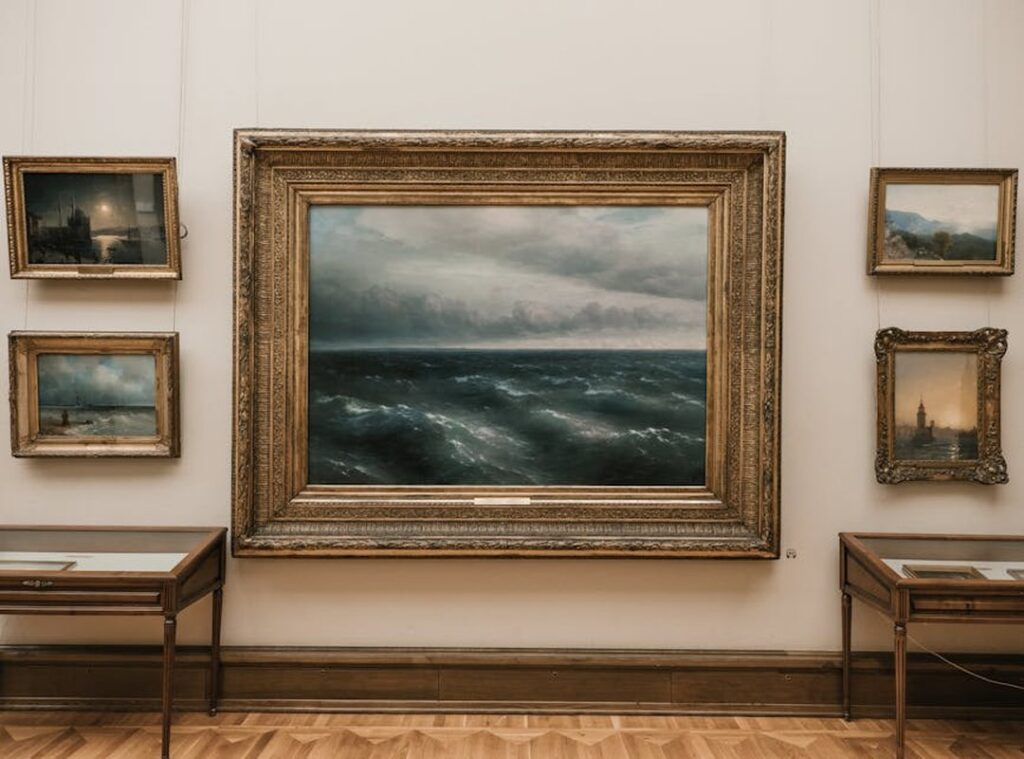
You walk into a gallery and stop dead.
That thick paint. That light catching the ridges. That feeling like the thing is breathing.
Most oil paintings online? Flat. Lifeless.
Printed on canvas but missing the point entirely.
I’ve spent years watching collectors squint at screens, then sigh and close the tab.
They want real presence. Not pixels pretending to be pigment.
This isn’t about gallery trends or art-world buzzwords.
It’s about Gallery Oil Paintings Arcagallerdate. Works built to hold space in a room, not just fill it.
I’ve handled these pieces. Watched them hang under different lights. Seen how they shift from morning to dusk.
I’ve sat with curators who reject ninety percent of submissions for failing basic oil-painting standards.
And I’ve talked to buyers who paid five figures. Then hung the work and felt instantly calmer.
Why do these matter more than mass-market prints?
Because texture is truth. Because luminosity isn’t faked. Because emotional resonance doesn’t scale.
This article answers exactly that.
No fluff. No theory. Just what you need to know before you commit.
Why Arcagallerdate’s Paintings Don’t Disappear on Screen
I stare at them for minutes. Not because they’re pretty. Because the paint moves when you scroll.
Arcagallerdate builds oil paintings like bricklayers build walls. Layer on layer, with intention.
Impasto isn’t just thick paint. It’s ridges you can feel in a JPEG. Glazing isn’t some fancy term.
It’s how light sinks into the surface and bounces back, warm and slow.
Most AI “oil-style” images flatten out at 200% zoom. You see pixels. You see noise.
You don’t see pigment.
Arcagallerdate’s work holds up. Because it’s real.
No giclées. No prints. Ever.
Just hand-painted canvases, signed, stamped, documented.
You want proof? Look at the ‘Coastal Memory Layers’ series. They used lead-white underpainting on linen that was sized twice.
Then layered ultramarine and terre verte (pigments) that won’t yellow in fifty years.
That’s not aesthetic choice. That’s archival stubbornness.
Most galleries skip this. They’ll hang a print and call it “original.” Not here.
Canvas prep matters. Pigment choice matters. Signature placement matters.
I’ve held one of these in my hands. The weight alone tells you something’s different.
Material authenticity isn’t marketing speak. It’s the difference between looking at a painting and standing in front of one.
You’ve seen digital art that looks like oil. You know it’s hollow.
So why settle?
Gallery Oil Paintings Arcagallerdate belong on walls (not) just feeds.
Zoom in. You’ll still see the brushstroke.
Memory, Walls, Light
I painted a teacup last year. Not the cup itself (the) way light hit it at 4:17 p.m. in my grandmother’s kitchen. That’s memory-infused realism.
It’s not nostalgia. It’s precision.
You see it in Dust Motel, where the slow-drying oil lets the shadow under the radiator bleed just enough. No hard edges, no Photoshop blur. Just time doing its job.
Quiet abstraction of domestic space? That’s the hallway in Threshold II. No doors.
No names. Just warm gray and the weight of titanium white built up in six layers. Oil doesn’t lie.
It holds mass.
Ecological stillness isn’t “pretty nature shots.” It’s Mudflat, Low Tide. One horizon, two tones, zero movement. The paint is thick where the water meets the shore.
Thin where the sky starts. You feel the silence because the medium forces you to slow down.
The artist said it plainly: “I don’t paint rooms. I paint what the room remembers.”
That quote came from her interview at Arcagallerdate. Not a press release, not a catalog essay. She said it while wiping her brush on a rag.
Collectors come back for these themes because they age like wine, not like trending filters. A painting that hums with quiet tension in 2024 still hums in 2034.
It’s not about decoration. It’s about return.
You’ve stood in front of a piece and felt like it knew your name. That’s not accident. That’s intention (built) into every stroke, every dry layer, every choice of pigment.
Gallery Oil Paintings Arcagallerdate aren’t trends. They’re anchors.
How to Spot Real Paintings (Before You Pay)

I look at brushstrokes first. Not the image. The direction of the stroke under raking light.
Real paint builds up. Fake paint sits flat. You can see it.
Canvas weave texture beneath the paint? That’s a tell. If you can’t see or feel the canvas through thin layers, something’s off.
You’ve seen it.
Student-grade paint covers too well. Hand-ground pigments don’t hide the ground.
Signature placement matters. Consistent location across a body of work? Good sign.
A signature slapped in the corner of every piece, even ones made decades apart? Red flag.
I go into much more detail on this in Gallery Paintings Arcagallerdate.
Studio numbering helps (if) it’s documented, legible, and matches archive records. Not just a number scratched in wet paint last Tuesday.
Arcagallerdate prices reflect real costs: pigment grade, hours spent, whether it’s a unique piece or part of a limited edition. No mystery markups. You pay for what’s there.
Not for “vibe” or “investment potential”.
Glossy varnish hiding texture? Walk away. Identical sizing across unrelated works?
Suspicious. Missing provenance paperwork? Don’t ask (just) leave.
Here’s your checklist before you click buy or even email:
Can I see brushstroke direction? Is canvas texture visible where paint is thin? Does the signature match known examples?
Is there studio numbering and supporting documentation?
You’re not buying decor. You’re buying labor, material, time. And history.
The Gallery paintings arcagallerdate page shows how that looks when done right.
Gallery Oil Paintings Arcagallerdate aren’t priced by whim. They’re priced by weight (of) pigment, of hours, of proof.
If it feels vague, it probably is.
Oil Paintings Aren’t Posters. Hang Them Like Art
I hang oil paintings like they’re alive. Because they are (thick) paint, texture, light catching ridges at different angles.
LEDs at 2700K. 3000K warm up the pigment without frying it. I aim them just off-center so glare doesn’t flatten the brushwork. (UV damage is silent and permanent.)
Studs matter. Always. A 24×36” piece pulls hard on the top corners.
Use weight-rated French cleats or D-rings rated for double the canvas weight. Not guesswork. Not hope.
Hang the center at 57 (60) inches from the floor. That’s eye level for most people standing in a room. Not “art height.” Human height.
Dust with a dry microfiber cloth (no) water, no Windex, no “artist-safe” sprays. They leave residue. I’ve seen it cloud glazes.
Keep humidity under 60%. No bathrooms. No sunrooms.
Oil cracks when it breathes too fast.
Scale changes how you move in a room. A 24×36” pulls you in. A 48×72” makes the ceiling feel lower, the walls lean in.
It’s physical.
That’s why Gallery Oil Paintings Arcagallerdate demand real space. Not just wall real estate.
If you’re unsure how galleries handle this kind of presence, start here: How Art Galleries Work Arcagallerdate
One Painting. One Real Moment.
You want art that breathes (not) wallpaper.
I’ve seen how fast decor fades. How hollow it feels when nothing sticks to the ribs. You’re done with that.
Gallery Oil Paintings Arcagallerdate answers this. Not with trends. With oil’s weight.
Its smell. Its slow, stubborn truth.
Arcagallerdate doesn’t stock filler. They curate for presence. For the piece that makes you pause mid-step.
So pick one thing: impasto texture. A coastal memory. That color you can’t name but recognize in your chest.
Go look at three works using it.
Which one makes your breath catch? Which one you keep thinking about after you close the tab?
That’s not chance. That’s alignment.
Great oil painting doesn’t shout (it) waits for you to lean in. Start there.
Click now. Find yours.