
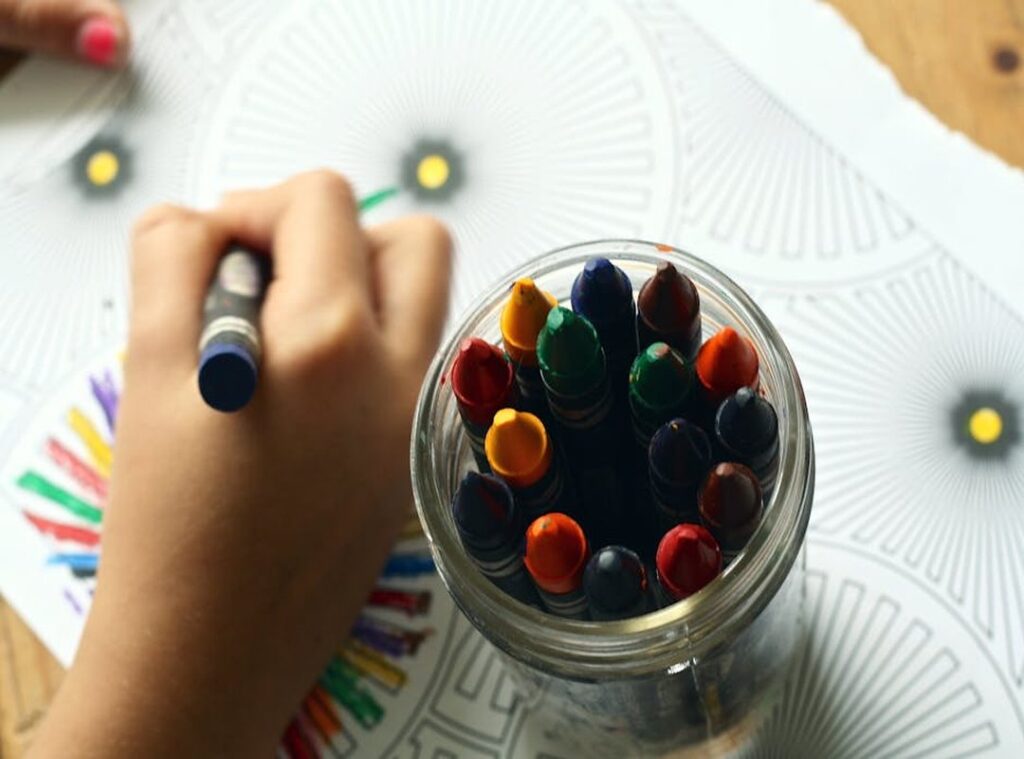
You’re scrolling at 10:47 p.m. Kids asleep. Coffee cold.
Your thumb’s tired.
You need crafts that don’t require a craft store run or a degree in origami.
Not the kind that look amazing on Pinterest but fall apart when your kid touches them.
Not the kind that take two hours to prep and five minutes to destroy.
I’ve dug through every post on Lookwhatmomfound. Not once. Three times.
I’ve tried the projects with first graders, preschoolers, and my own skeptical ten-year-old who says “boring” before you even open the scissors.
Most sites swing too far one way or the other. Too simple = kids zone out. Too complex = you zone out (and then slowly hide the glue gun).
That’s why Lwmfcrafts Creative Activities From Lookwhatmomfound stands out. These aren’t just cute. They’re built to work (for) real time, real materials, real attention spans.
I’m not listing every post.
I’m showing you the ones that solve actual problems.
Like how to stretch one project across three age groups. Or how to swap supplies you already have. Or how to bail when things go sideways (and they will).
You’ll get clarity. Not clutter. And zero guilt about screen time.
Let’s start with the first one that actually held my kid’s focus for more than seven minutes.
Why Lwmfcrafts Isn’t Just Another Craft Blog
I’ve scrolled through hundreds of craft sites. Most want you to buy glitter glue, foam sheets, and a Cricut.
Lwmfcrafts starts where the others stop (with) what’s already in your junk drawer.
No specialty supplies. No “just one more trip to Michaels.” Just tape, paper plates, old socks, and a spoon.
That’s not minimalism. That’s respect for your time and sanity.
Some say “low-prep” means low-quality. I call that nonsense. Try the sock-puppet-to-marionette upgrade path.
Same materials, three levels of complexity, zero new shopping.
The Project Variations sections aren’t fluff. They teach kids how to ask “What if I use scissors instead?” or “Can this work with one hand?” (real) iteration, not just coloring inside lines.
Three things they actually fixed:
No-glue alternatives (hello, binder clip + rubber band hinges)
Sensory-inclusive swaps (no glitter bombs, no sticky fingers, still joyful)
Cleanup hacks built into the instructions (yes, the “messy” step doubles as the wipe-down)
This isn’t theory. It’s tested by parents who said “my kid walked away mid-scissor-cut”. So the next version added grip guides and chunkier handles.
Lwmfcrafts Creative Activities From Lookwhatmomfound evolves because real people tried it. And complained. Loudly.
You know what else evolves? Your kid’s attention span. Good thing these projects keep up.
Top 5 Lwmfcrafts Projects That Actually Teach Something
I tried all five. Not once. Multiple times.
These five worked (and) not just as busywork.
With kids aged 3 to 11. Some stuck. Some flopped.
Rainbow Salt Dough Sculptures
You swap cornstarch for half the flour. That changes texture and drying time. A 3-year-old squishes.
A 10-year-old tests ratios and logs cracking patterns in a notebook. Fine motor control jumps. But the real win?
They start predicting outcomes before mixing. Color theory sneaks in sideways.
Egg Carton Seed Starters
Zero new purchases. Just cartons, soil, and kitchen scraps. Kids poke holes, fill, water, wait.
Then they notice: south-facing windows grow sprouts faster. No lecture needed. Just data from their own windowsill.
Bottle Cap Mosaics
Glue caps to cardboard. No templates. No rules.
But alignment forces spatial reasoning. And patience. One kid lined up 47 blue caps before realizing she’d made a gradient.
She didn’t know the word gradient. She built it.
Cereal Box Marble Runs
Tape, scissors, tape again. Gravity does the rest. Physics isn’t abstract here.
It’s “why did it fly off at the curve?” You get engineering logic. Plus serious scissor control gains.
Plastic Strip Weaving
Cut grocery bags into strips. Weave on cardboard looms. Tension matters.
Too loose = collapse. Too tight = snapped plastic. That’s biomechanics disguised as craft.
These aren’t Pinterest fluff. They’re Lwmfcrafts Creative Activities From Lookwhatmomfound (tested,) adapted, and slowly teaching way more than glue sticks ever promised.
Adapt Any Lwmfcrafts Project (Without) Breaking It
I adapt crafts all the time. Not to make them easier. To make them work.
The 3-Point Adaptation System is how I do it. Skill Layer. Cognitive Layer.
Sensory Layer. If you skip one, something falls apart.
Take Nature Weaving Boards. A kid with tactile defensiveness? Swap yarn for soft ribbons (no scratch, no panic).
Add lavender oil to the wood frame. Scent cues ground them before touch even starts.
You can read more about this in Lwmfcrafts fun crafts by lookwhatmomfound.
Another kid building narrative skills? Hand them photo cards of each step. “First we gathered sticks. Then we tied the ribbon.” They sequence it after, not just during.
Does that sound like overkill? It’s not. You’re not changing the craft.
You’re changing how the brain connects to it.
Here’s what happens when you go too far: cut out the knot-tying, skip the weaving tension, remove the need to hold two things at once. You’ve erased the point. The motor challenge.
The cause-effect feedback. The frustration that leads to problem-solving.
That’s why I keep a cheat sheet handy.
| Goal | Lwmfcrafts project tags |
|---|---|
| Frustration tolerance | nature-weaving, pom-pom-toss, button-snake |
| Bilateral coordination | cardboard-loom, leaf-rubbing-board, pipe-cleaner-spirals |
| Vocabulary expansion | sensory-bag-scavenger, color-mixing-tray, texture-match-game |
You’ll find dozens of starting points in the Lwmfcrafts fun crafts by lookwhatmomfound collection.
Lwmfcrafts Creative Activities From Lookwhatmomfound aren’t templates. They’re invitations.
Adapt (but) don’t hollow out.
What’s the last thing you simplified until it stopped teaching anything?
I go into much more detail on this in Activities Brought to You by Lookwhatmomfound Lwmfcrafts.
Beyond the Craft: Why Process Beats Perfection
I watch kids glue leaves to paper and call it “Sticky Leaf Collage.” Not “Autumn Nature Art.” Big difference.
That title choice isn’t cute. It’s deliberate. It puts the child’s action first. sticky, leaf, collage.
Not an adult’s label.
You’ll see it everywhere: captions like “She spilled the glue. Then she stuck three feathers sideways. Discovery.” Not “Mistake corrected.”
That language reshapes how adults show up. I’ve seen parents go from “Let me fix that for you” to “What happened when the glue hit the cardboard?” in under a week.
It’s not magic. It’s consistency. Repetition rewires behavior.
This mirrors real developmental science. Vygotsky called it the zone of proximal development (learning) happens just beyond what a kid can do alone, with light support.
Not instruction. Not correction. Just presence.
A nudge. A question.
Lwmfcrafts Creative Activities From Lookwhatmomfound builds that muscle slowly. No fanfare. No pressure.
The work isn’t about the finished thing. It’s about the kid who tries again because last time they noticed something (and) that felt good.
If you want to see how this plays out across dozens of projects, this guide shows exactly how it unfolds in practice.
read more
Start Your First Lwmfcrafts Innovation Today
You want crafts that grow with your child. Not just kill time. Not just look cute on Instagram.
I’ve been there. Glue sticks drying out, scissors lost, projects abandoned before the first cut.
Lwmfcrafts Creative Activities From Lookwhatmomfound works because it starts where you are. Right now. With what’s already in your drawer.
No prep. No pressure. Just one project from the Top 5 list.
Try it today. Watch what happens when you stop chasing perfection and start following their curiosity.
That spark? That’s not magic. It’s intentionality in action.
The most new craft isn’t the one that looks perfect (it’s) the one that sparks the next question.
Grab a spoon. A bowl. A piece of paper.
Start there.
You’ll see the difference in five minutes.