What Abstract Expressionists Were Really After
The canvas stopped being a window to the world. Abstract Expressionists weren’t trying to paint apples on a table or rolling hills in Tuscany. They were looking for something messier and more honest what feelings look like when you let them speak first. Emotion, not objects. That was the point.
This pivot wasn’t random. It came after a world war, during a time when trust in structure political, social, artistic was cracked. Artists turned inward. They asked not what they could capture objectively, but what they could lay bare. Personal trauma, identity, unrest all of it spilled onto canvas in bold, sometimes violent ways.
Their process became part of the work. Big gestures, slashes of color, drips and splatters this wasn’t polish, it was presence. The act of painting was as important as the outcome. Motion and emotion blurred into a new kind of impulse art, driven by instinct more than intellect. Color became a signal, gesture a confession. It wasn’t tidy, but it was alive.
Why Color Isn’t Just Color
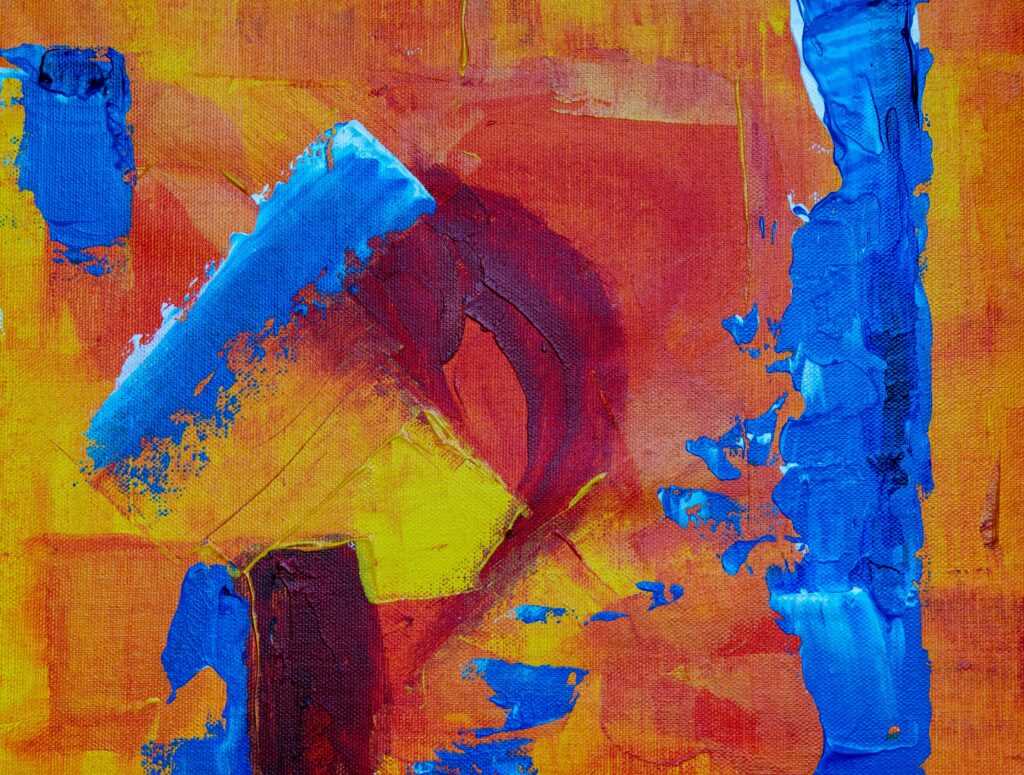
To abstract expressionists, color wasn’t background it was the whole point. Bold reds didn’t just decorate; they screamed. Deep blues didn’t sit quietly; they brooded. This was emotion delivered raw: energy, anxiety, longing, rage, serenity. All of it, packed into the hue itself. When the brush hit the canvas, it wasn’t painting a tree or a bowl of fruit. The subject wasn’t an object it was feeling, plain and untamed.
That’s the twist. In many of these works, there’s no figure, no focal point, no scene to narrate. The color is the story. It’s the punchline, the tension, the breath you hold. Mark Rothko didn’t craft sunsets; he built soft walls of grief and awe. Joan Mitchell didn’t chase likeness; she chased memory, gut first.
This wasn’t about decorating rooms. It was about transferring something inhabitable emotion without the safety net of logic.
Want to dig deeper into how color walked off the sidelines and took center stage? Check out our full deep dive on the role of color.
Key Artists Who Pushed Color to the Limit

Mark Rothko didn’t paint scenes. He painted spaces you feel before you understand. His massive color fields those hazy blocks of reds, maroons, grays pull viewers into quiet, emotional chambers. It’s not really about color combinations. It’s about gravity. His work asks you to stop scrolling through life and just sit with a feeling, even if it’s discomfort.
Helen Frankenthaler changed the game in a different way. Her technique pouring diluted paint onto raw canvas let color bleed like thoughts or instincts. It wasn’t planned. It moved with her. The result feels like you’re watching an emotion form in real time. She made color intuitive, not calculated. And that freedom showed others what was possible when you quit trying too hard.
Then you have Joan Mitchell, who worked with paint like it was language. Her brushstrokes move fast, loud, frustrated, joyful. Her color is thinking raw, immediate, barely filtered. She wasn’t decorating. She was wrestling something onto the canvas. The result is deeply human. Her work feels like memory, or the way thoughts collide in your head when you’re overwhelmed.
These three didn’t just use color. They expanded what it could say and left a blueprint for everyone chasing emotion without a script.
The Science and Psychology Behind It
Color isn’t just mood it’s strategy. Abstract Expressionists knew that certain tones do more than just decorate a canvas. Warm palettes reds, oranges, vibrant yellows push forward, stir, provoke. They speak in all caps. Cool tones blues, greens, muted purples pull back. They soften the edge. The right combination can make a canvas buzz or breathe.
Then there’s scale. Bigger gestures and wider color fields don’t just attract attention they demand a reaction. Add heavy saturation to that, and the canvas practically lunges at you. Dial it down, and things get intimate, maybe even meditative. Play between the two, and the viewer shifts between confrontation and release.
And here’s where things get trickier: placement creates vibration. Put two bold colors side by side say, electric blue next to crimson and the space between them pulses. This optical tension isn’t accidental. These artists understood that color placement could build rhythm, unease, energy. Not through form or figures but through sight alone.
This wasn’t just painting. It was a full body, sensory play balance, tension, release all controlled, amplified, or dialed back through color.
Color’s Ongoing Influence on Modern Expression
Abstract expressionism didn’t vanish it just changed canvases. The bold brushstrokes, open emotion, and raw color palettes of the mid 20th century now pulse through digital screens. From digital paintings to generative art, the DNA of Abstract Expressionism lives on in color first compositions and emotion led design. Motion artists use sprawling gradients the same way Helen Frankenthaler used dyes. Virtual brushwork echoes Pollock’s explosive, intuitive gestures.
For today’s digital artists, color isn’t just a finish it’s language. Whether it’s glitch art, immersive VR installations, or NFT pieces, creators are still tapping into the primal energy embedded in Rothko style color fields or Mitchell’s chaotic vibrancy. Sure, the tools are different. But the goal? Still the same. To make you feel something.
For a deeper look at how color continues to drive meaning in both traditional and contemporary work, see The Role of Color in Abstract Expressionism.
Why It Still Resonates
Abstract expressionism wasn’t just a movement it was a release. Decades later, its grip hasn’t loosened. Why? Because emotion is timeless. We may digitize everything, stream everything, quantify everything but raw, unfiltered feeling still hits hard. It always will.
Color, in this space, still does the talking. It reaches deeper than language ever could, pulling something up from the gut. A Rothko or a Mitchell might hang silent, but it doesn’t whisper. It hums. It presses into you.
And abstraction? At its best, it doesn’t push an idea it opens a door. It gives viewers the space to bring their own story. No agenda, no clear message. Just energy, mood, and enough room to breathe. That’s why it still connects. The paint might dry, but the meaning never stops moving.